
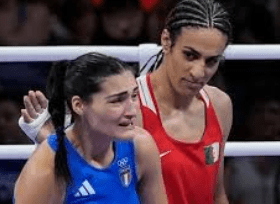
Imane Khelif has broken her silence in an interview with the French newspaper L’Équipe, reported by Iusport, confirming for the first time that they possess the SRY gene located on the Y chromosome. Although Khelif acknowledges carrying an XY karyotype, typically associated with the male biological sex, they reiterate that they identify as a woman and were raised as a girl, categorically denying being transgender.
This revelation comes after 18 months of global controversy over unfair play, following accusations that Khelif won the gold medal in the women’s welterweight category at the Paris 2024 Olympic Games by relying on advantages provided by testosterone levels and male biology. The dispute arose when Khelif and Lin had previously been disqualified by the International Boxing Association (IBA) at the 2023 World Championships for failing an eligibility test after both were found to carry XY chromosomes and elevated testosterone levels. Nevertheless, the International Olympic Committee (IOC) allowed their participation, advancing what critics described as the fallacious argument that “there is no scientific system to identify a woman,” according to its president.
What Does Having XY Chromosomes and a DSD Mean in Scientific Terms?
According to medical and journalistic sources, everything suggests that Khelif has 5-alpha-reductase type 2 deficiency (5-ARD), a Difference in Sex Development (DSD, formerly referred to as intersex conditions), which affects only genetically male (XY) individuals—that is, males. Essentially, this would mean that Khelif is a male with a DSD who, at birth, may have presented ambiguous genitalia (such as a “micropenis” or undescended testes), which in developing countries such as Algeria could have led to an erroneous female sex assignment in the birth registry. This would explain having been raised as a girl, as reflected in childhood family photographs.

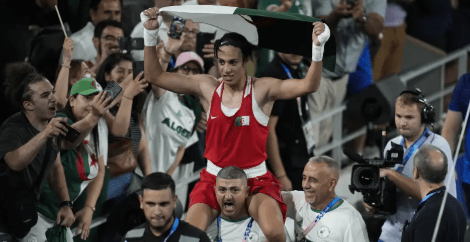
In people with these conditions, the body often responds to testosterone during puberty by developing male characteristics such as increased muscle mass, bone density, and strength, similar to a typical male puberty—because, in biological terms, we are speaking of a male. The post-puberty male socialisation attributed to Khelif would also explain why, unlike women in their environment who appear veiled in public images, Khelif behaves as a male athlete, dresses and gestures in ways associated with men, and even climbed onto another man’s shoulders when celebrating victory over female boxers. Temporary reductions in testosterone levels do not reverse the effects of having gone through male puberty, which confers significant athletic advantages that become dangerous in contact sports such as boxing.
World Boxing Introduces Eligibility Tests to Guarantee Fair and Safe Competition
The World Boxing federation has implemented new regulations governing eligibility criteria in the sport in order to safeguard sporting integrity and women’s rights. Applied for the first time last summer during the World Boxing Championships in Liverpool—an event neither Khelif nor Lin attended—the rules establish that, to compete in the women’s category, athletes must demonstrate the presence of XX chromosomes or the absence of the SRY gene (specific to the Y chromosome), or present differences in sex development without male androgenisation. This definition, based on precise scientific criteria, removes potential ambiguities and protects the female competitive category.
World Boxing Introduces Eligibility Tests to Guarantee Fair and Safe Competition
The World Boxing federation has implemented new regulations governing eligibility criteria in the sport in order to safeguard sporting integrity and women’s rights. Applied for the first time last summer during the World Boxing Championships in Liverpool—an event neither Khelif nor Lin attended—the rules establish that, to compete in the women’s category, athletes must demonstrate the presence of XX chromosomes or the absence of the SRY gene (specific to the Y chromosome), or present differences in sex development without male androgenisation. This definition, based on precise scientific criteria, removes potential ambiguities and protects the female competitive category.
These tests rely on rigorous scientific methods and may be carried out using nasal or buccal swabs, saliva, or blood samples, thus ensuring non-invasive procedures. World Boxing has also determined that these sex-verification certificates will not be considered confidential medical information for the purposes of sporting eligibility, promoting transparency without compromising athletes’ dignity or privacy. Both women and men must provide written consent for these data not to be treated as protected medical information if they wish to compete.
For this reason, organisations defending women’s rights in sport, along with feminist organisations, once again demand that Khelif not only be prevented from competing against women because of the risks of injury and unfair play involved, but also be required to return the Olympic medal won through cheating, in violation of the fundamental principle of fair play enshrined in the Olympic Charter.
This article was originally published in Spanish on IUSPORT (09/02/26)

 JuristaFeminista
Deja un comentario